Vivio Clinical App
Ventric Health · Vivio · Q1–Q3 2023
Designing a clinical tool for heart failure diagnosis without a research budget meant working from secondary sources, SME walkthroughs, and a clear constraint: a wrong reading presented as reliable is worse than no reading at all.

My Role
Lead Product Designer
Methods
Secondary research, SME walkthroughs, failure-mode mapping, Design Systems Architecture & Governance, Apple Human Interface Guidelines
Tools
Native iOS (iPad), Figma
Status
Shipped native iOS app + design system, FDA-cleared
The Brief
First usable version of a zero-to-one clinical tool
Vivio is the only non-invasive solution for measuring LVEDP — the clinical hallmark of elevated filling pressure and the key indicator for diagnosing heart failure. An engineering-built proof of concept existed, but it was not designed for clinical use. The work was to design the first real version: a complete native iOS app and design system, built from scratch, for use in expanded care environments by non-specialist clinicians.
The Constraint
No primary research access
There was no budget for primary research, pre- or post-implementation. The design process relied on secondary research — competitive analysis of existing non-invasive approaches including Vericor and the current invasive gold standards (left heart catheterization, pulmonary artery catheterization) — plus structured walkthroughs with SMEs and engineers to map the full workflow and surface every failure mode before a single screen was designed.
Design Decisions
Three choices that shaped the system
Hard stops over soft warnings. The app was designed to refuse to present a result it could not stand behind. If a device could not provide a reliable measurement, the workflow stopped. This was not a UX preference — it was a patient safety requirement. Incorrect readings presented as accurate are more dangerous than an inconclusive result.
Single-screen workflows with persistent patient context. Every step in the recording session was designed as a single-screen action. Patient data persisted across the session so a clinician could not lose their place mid-workflow with a patient present. No dead ends, no back navigation required to recover.
Error states as clinical direction. The app needed to handle over 20 distinct failure states across Bluetooth pairing, device signal, recording quality, and data transmission. Each error state was mapped with SMEs and engineers to produce actionable guidance — not system error messages, but clear instructions for what to do next. A confusing error in a diagnostic session does not just frustrate. It invalidates the measurement.
The Outcome
FDA clearance and a published multicenter study
The Vivio system received FDA clearance. A subsequent multicenter study evaluated 1,238 high-risk patients across 25 primary care sites, with workflows led by medical assistants. The study reported a 92.2% conclusive diagnostic rate in outpatient settings. Separately, 40.1% of screened patients were found to have elevated LVEDP — and 42.3% of those were asymptomatic, meaning the tool surfaced cardiac risk that existing care pathways were missing entirely.
The clinical findings belong to the research. The design's job was to not be the reason they didn't happen.
Project Gallery
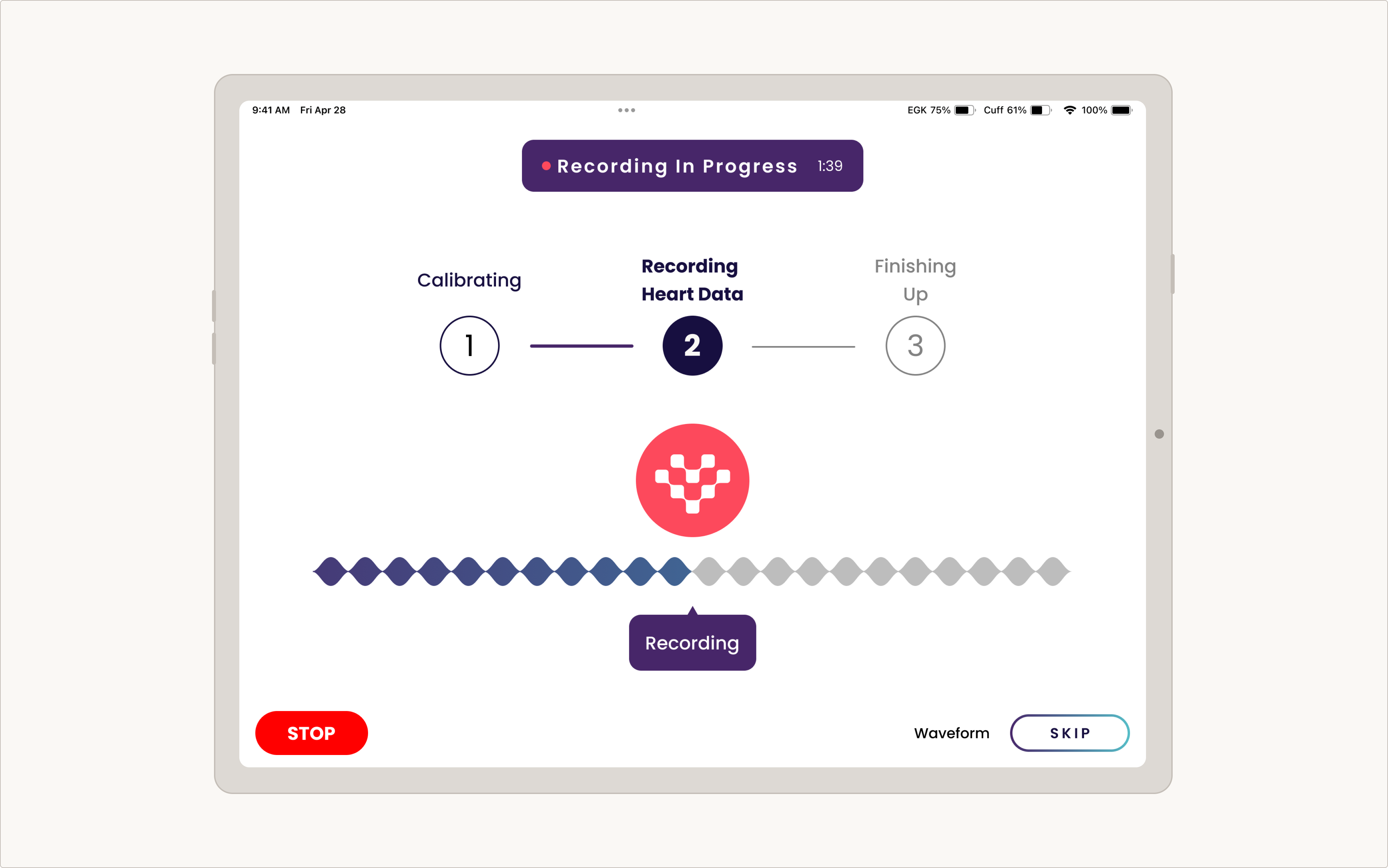
Recording in progress — step indicator, live waveform, and severity-coded STOP action
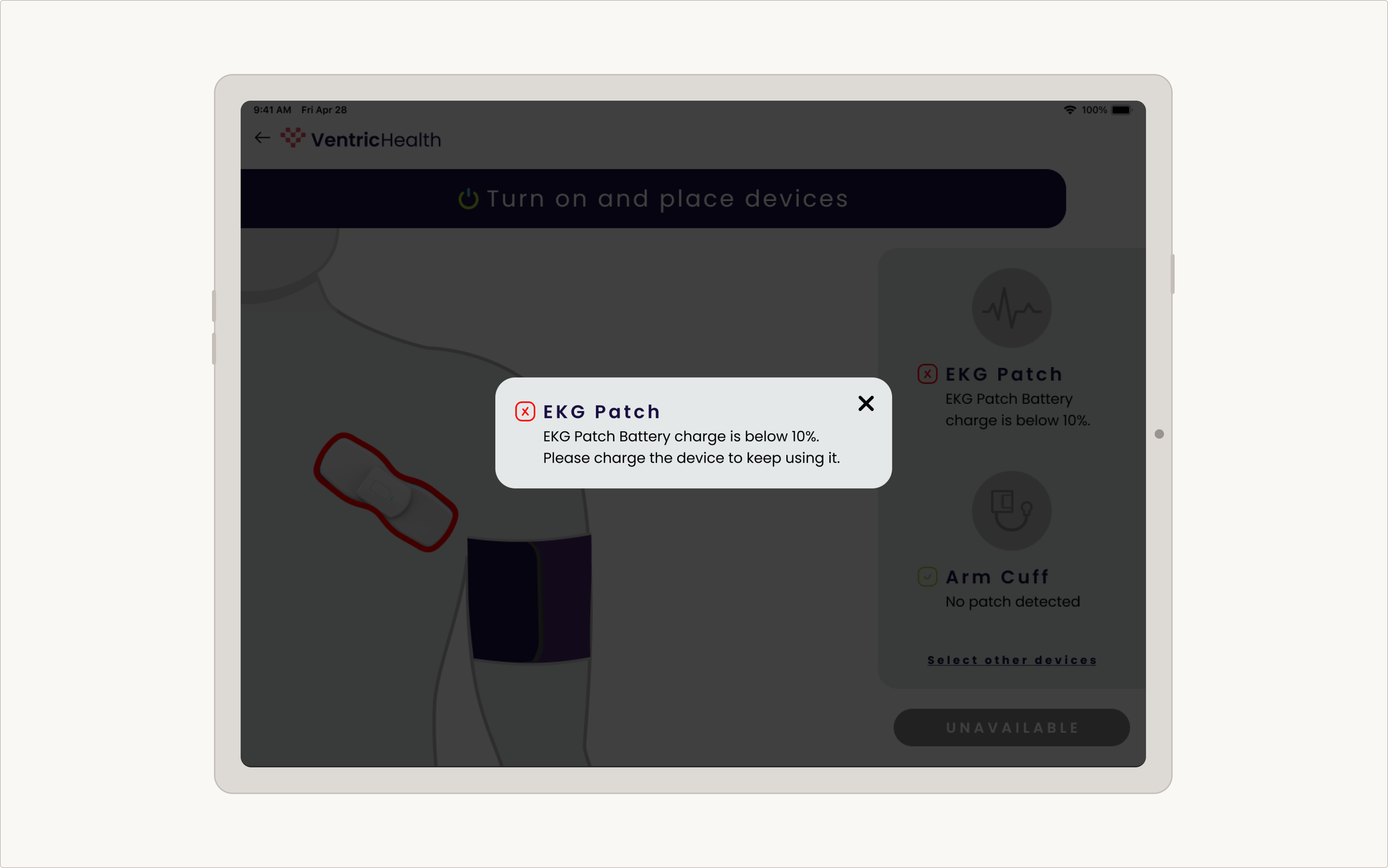
Hard stop error state — device unavailable, workflow blocked until resolved
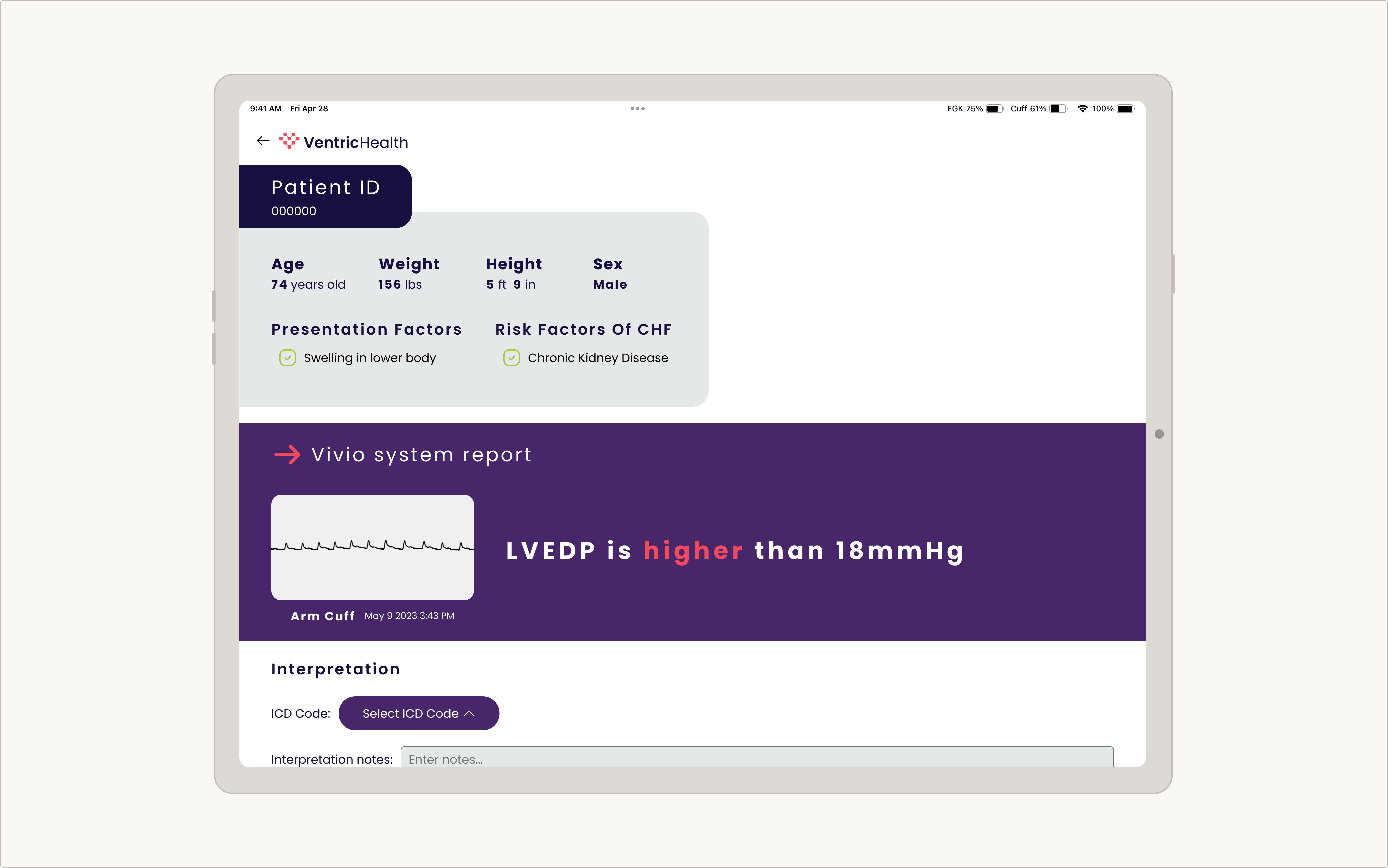
Results screen — single primary output with persistent patient context above
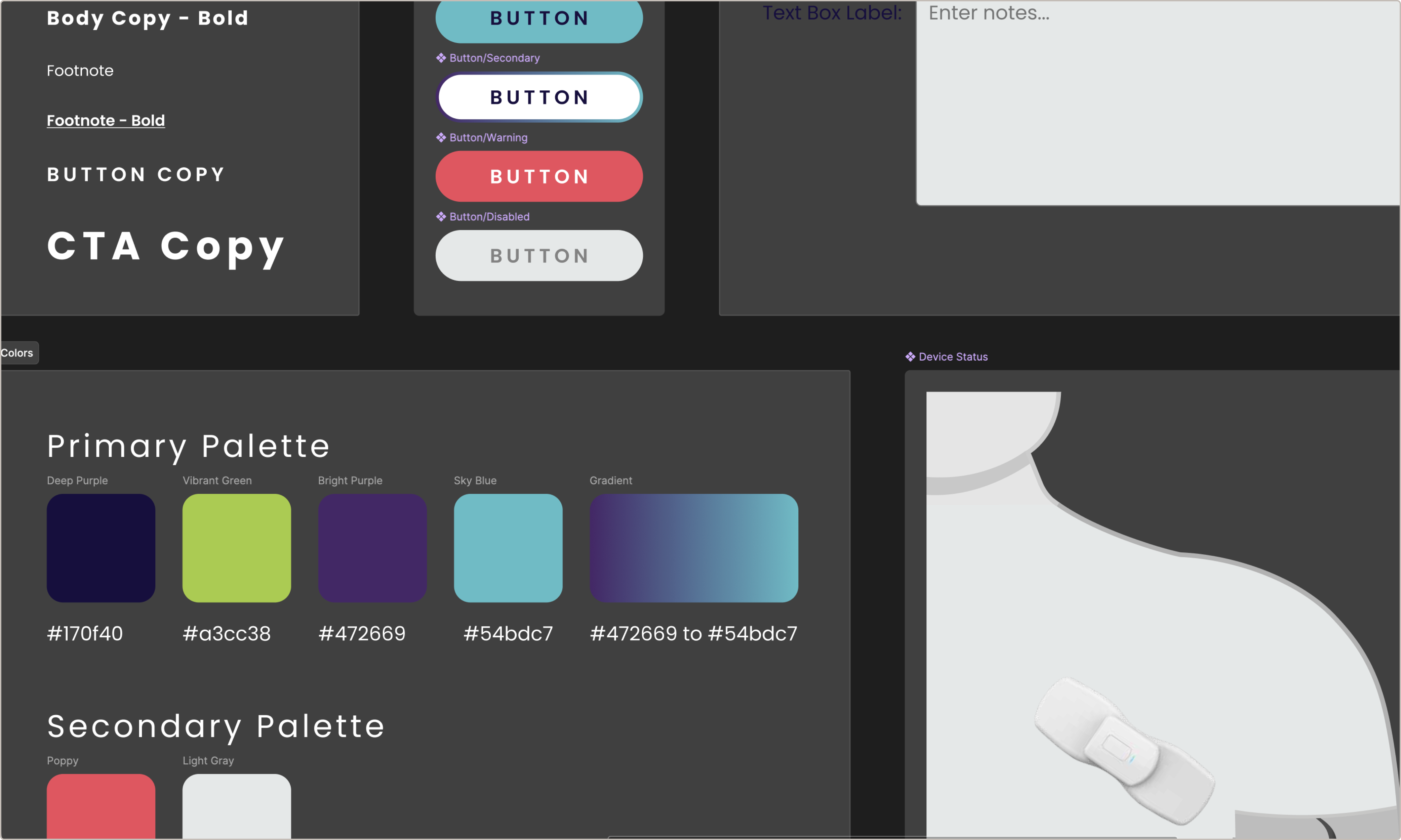
Custom iOS design system — color, typography, and component states built from scratch
Interested?