Optimizing the Ancillary Insurance Journey
WTW · Via Benefits · Q2 2024
Medicare enrollees shopping for dental, vision, and hearing coverage face a product category most people have never had to think about before. My research set out to understand where the confusion lived — and what it would take to remove it.
My Role
UX Researcher
Methods
Moderated usability sessions, qualitative interviews
Tools
UserLytics, Zoom, FigJam
Status
Actionable insights delivered, design improvements proposed
The Brief
A deep dive into ancillary insurance navigation
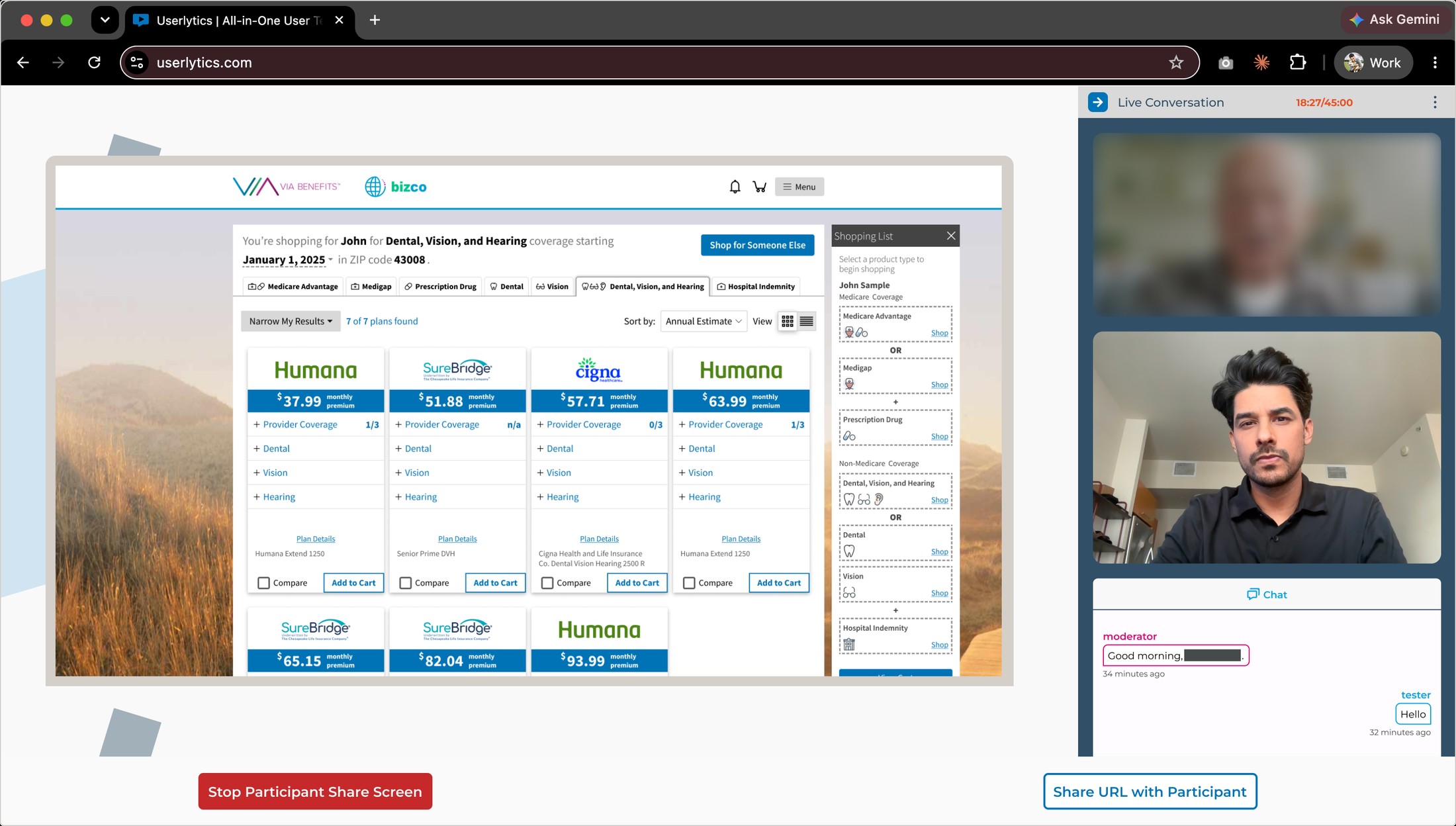
Via Benefits offered ancillary insurance products — dental, vision, and hearing coverage — as part of its broader Medicare shopping experience. The team needed a qualitative deep dive into how enrollees actually navigated this category, where comprehension broke down, and what could be done to streamline the decision-making process.
The Problem
An experience that assumed product literacy no one had
Ancillary insurance is genuinely confusing. Unlike medical coverage, most Medicare enrollees haven't shopped for standalone dental or vision plans before. They arrive without a mental model for how these products work, what they cover, or how to compare them. The existing experience assumed a level of product literacy that most users simply didn't have.
The Process
Mixed-methods research across a range of literacy levels
I designed and ran a mixed-methods research study combining moderated usability sessions with qualitative interviews. Sessions were structured to observe navigation behavior in real time while also capturing the reasoning behind decisions — not just what users did, but why.
I mapped comprehension gaps at each step of the shopping flow, identifying where users were making decisions based on misunderstanding rather than informed choice.
The Solution
Prioritized findings that gave the team somewhere to go
The research produced a prioritized set of findings and recommendations. Key themes included: the need for plain-language category explanations before plan comparison, the importance of anchoring cost comparisons in annual out-of-pocket terms rather than monthly premiums, and the value of progressive disclosure — surfacing the most critical information first.
Interested?